Earth Day
1. Protea_CWBR.jpg

There is only one International Earth Day a year: However, every day is Earth Day.

This year’s theme is ‘Protect Our Species’


UNESCO says it best: International Earth Day is a reminder of the ‘Earth and its ecosystems [that] provide us with sustenance, and that we have a collective responsibility to achieve balance among the economic, social and environmental needs of present and future generations’.

UNESCO’s article for Earth Day exemplifies Heritage Sites as one of Nature’s largest strongholds for particularly endangered species. In their article they give examples of heritage sites around the world and pinpoint them as critical ecosystems for threatened species and vital resources for the earth’s life support. 

The Cape Floral Region Protected Area in South Africa, known as the world’s hottest hot-spot for plant diversity and endemism, supports almost 20% of the continent’s flora: a haven for plants and 6000 endemic species to South Africa.

Cape Winelands Biosphere Reserve is located within the Western Cape Floral Kingdom and has some of the key areas for protection of particularly the fynbos biome. 

In protecting our species, to know the IUCN Red List is fundamental. 

Cape Nature has published a guide and introduction to The International Union for Conservation of Nature (IUCN) Red List which contains an inventory of criteria to evaluate the extinction risk of biological species and subspecies. The article gives examples of how South Africa’s plant and animal Red Lists are evaluated and complied as well as defining the nine categories in the Red List. 

A unified and standardized way to measure biodiversity loss, this list has become the backbone of global conservation, and is used to inform policy and conservation planning. To keep this list up to date a vast network of scientists, conservationists, and other stakeholders pool knowledge together. 

To read these articles follow the links below:

IUCN Red List

https://www.capenature.co.za/iucn-red-list-explained

An ode to Earth Day by UNESCO

https://whc.unesco.org/en/news/1960

UNESCO designates 24 new sites as part of the World Network of Biosphere Reserves
2. BRs_SA.png

The last meeting of the International Coordinating Council (ICC) of the UNESCO MAB (Man and the Biosphere) Programme, was held in Palembang, Indonesia from 23 to 28 July 2018.

During this meeting, 24 new biosphere reserves were designated and therefore added to the World Network of Biosphere Reserves (WNBR) that at present comprises 686 sites in 122 countries. Two countries have joined the WNBR for the first time, namely Moldova and Mozambique. These countries have not been part of the MAB network in the past, but have joined now with their first designated biosphere reserves, which are the Quirimbas Biosphere Reserve in Northern Mozambique and the Lower Prut Biosphere Reserve in the south of Moldova (an eastern European country located between Romania and Ukraine). 

Of the 24 new biosphere reserves (BR), five are located in Africa. These are Quirimbas BR in Mozambique, Arly BR in Burkina Faso, Tsimanampesotse–Nosy Ve Androka BR in Madagascar, Gombe Masito Ugalla BR in Tanzania, and Marico BR in South Africa. 

Marico BR is located in the North West Province, covering 447 269 ha and assisting in protecting the broader dolomitic aquifer system of the Province. The Marico River is recognised as one of the last free flowing pristine river systems in South Africa and the only one in the North West and Gauteng Provinces. It is one of a small number of rivers where the sources are eye springs fed from dolomitic aquifers and there are a number of rare tufa waterfall formations.  Heritage components include both historic and pre-historic sites and structures. The area encompasses one of the most biodiverse regions in South Africa, with the second highest number of recorded bird species. It is also home to multiple endangered and several unique species. The Marico Biosphere Reserve is managed by the Marico BR Non-profit Company. With the designation of Marico BR, South Africa now boasts ten biosphere reserves, collectively covering approximately 9.5% of South Africa’s total land area. This is clearly not an insignificant figure and demonstrates the MAB Programme’s contribution to the South African conservation estate.  


Learn about South African Biosphere Reserves
3. MAP_National_BR.jpg

South Africa has ten UNESCO designated biosphere reserves. Recently a booklet was produced to showcase the total impact of the MAB Programme in the country. The story of biosphere reserves and the impact they have on South Africa is powerful, therefore the main goal of this booklet is to communicate the collective value of biosphere reserves. Included is information on the MAB Programme in specific, Sustainable Development Goals, the Aichi Biodiversity Targets, UNESCO’s Lima Action Plan, as well as detailed information on each of the ten existing biosphere reserves. In conclusion, the impact of biosphere reserves is organised in accordance with  four core pillars, namely 

(1) Biodiversity Conservation, Awareness and Research

(2) Employment and Quality of Life

(3) Ecosystem Services

(4) Facilitation

It is believed that the booklet will contribute towards awareness and better understanding of the MAB Programme and the benefits that biosphere reserves have on both people and the greater landscape.

http://online.fliphtml5.com/koew/undf/


Ants
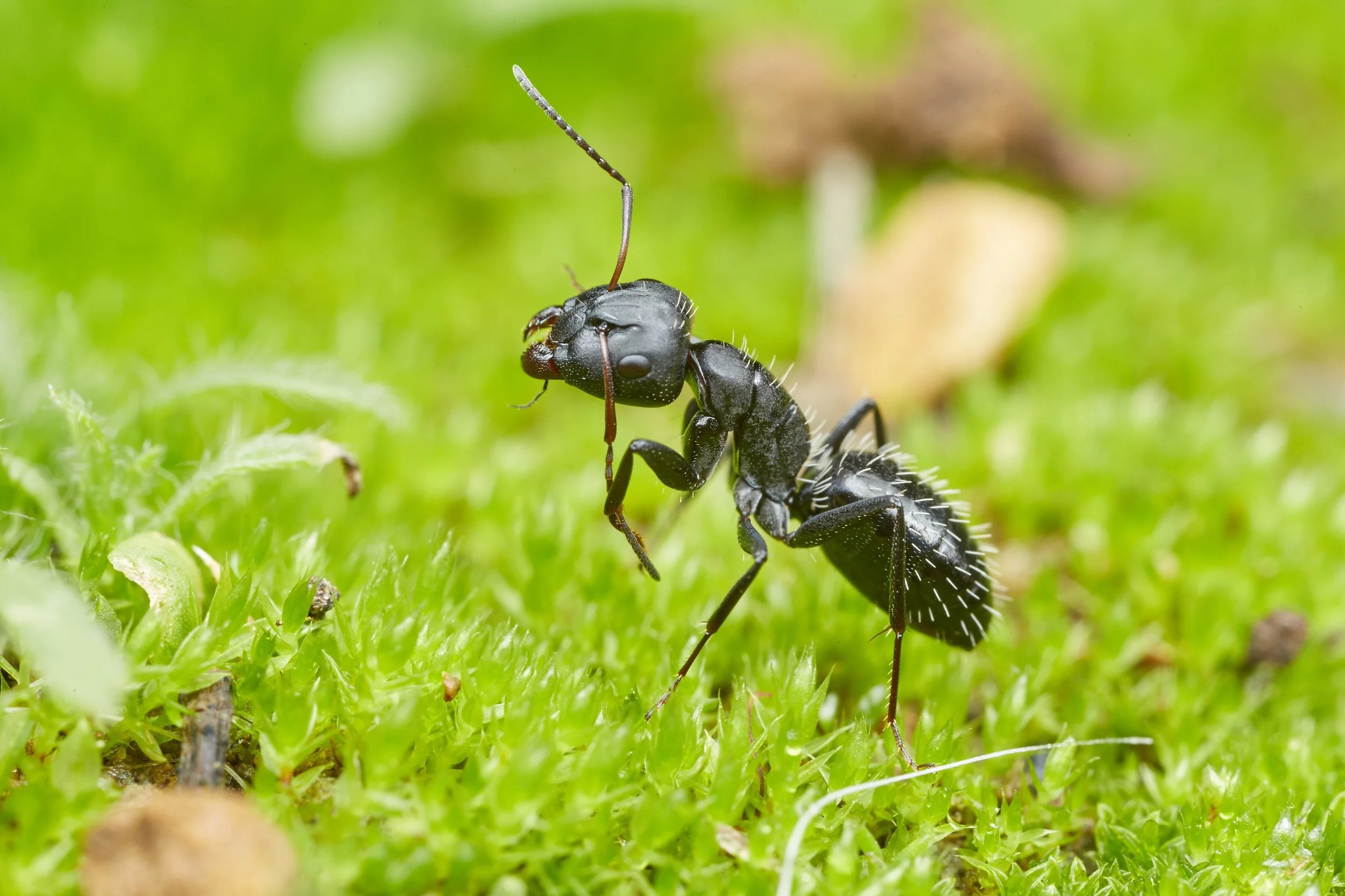
camponiveosetosus21flippie.jpg

Ants generally get a bad press. They spoil food, encourage aphids on plants, they bite, some of them sting, some even smell. When there’s lots of them in a swarm they can be scary, too, with all those little legs rustling around at high speed. The first question I’m always asked is “How can we get rid of ’em?”

                The answer is that you can’t. Ants are the most numerous insects on Earth, and if you should succeed in removing them from one place there are thousands more to move in and take their place. It’s far more rewarding, in fact, to get interested in them, because not only are they the most numerous insects, they’re also the most fascinating.

                Ants are social animals and they live in colonies where they organise themselves in many ways that superficially resemble human society. Ants feed and care for their young; ants cooperate to find food and bring it home; ants ‘farm’ other insects and ‘milk’ them for nutritious juices; ants care for and nurse their sick and injured comrades. Ants build their own castles from leaves or sticks or tiny bits of plant litter; they build ‘stables’ for their livestock; they excavate and turn over more soil than earthworms. They keep pets and they employ servants. Some of them grow their own crops for food; others employ living ‘nutcrackers’ to crack open seeds. They build road-like tracks across the sand and through leaf litter; they form living rafts and sail across lakes and rivers. And, in their most human-like behaviour of all, they make vicious war upon their own kind.

                There are about 25 000 species of ants in world, about 1000 of them in South Africa. Some are minute and hardly visible without magnification, while others are amongst the largest ants in the world, up to a whopping 25 mm long. Some have different sizes in the same nest; others are all the same size. Ants can be black, brown, red, orange, yellow, green, blue or even the most beautiful shimmering gold or silver – or they can be combinations of the above. They are never, ever white – so-called ‘white ants’ are really termites, related to cockroaches. Real ants are closely related to bees and wasps, occupying top spot on the insect ‘tree of life’. Most of them are completely harmless to humans, and those that are the most troublesome – the food spoilers in your kitchen, the aphid-bearers on your fruit trees – have been spread around our human living spaces by our own human commerce.

                Ants are in fact one of the most fundamentally important vectors in a healthy ecosystem – and that means environmental health for us humans too. So next time they give you trouble stop and think about the good they do, consuming millions of even more troublesome goggas, like the larvae of fleas and flies; cleaning up dead insects and even small vertebrates; recycling plant and animal material back into the soil. You don’t have to love ’em, but if you stop and look at them they’ll give you endless interest.

– Peter Slingsby