Posts tagged Conservation
Highlighting Biodiversity in the Boland

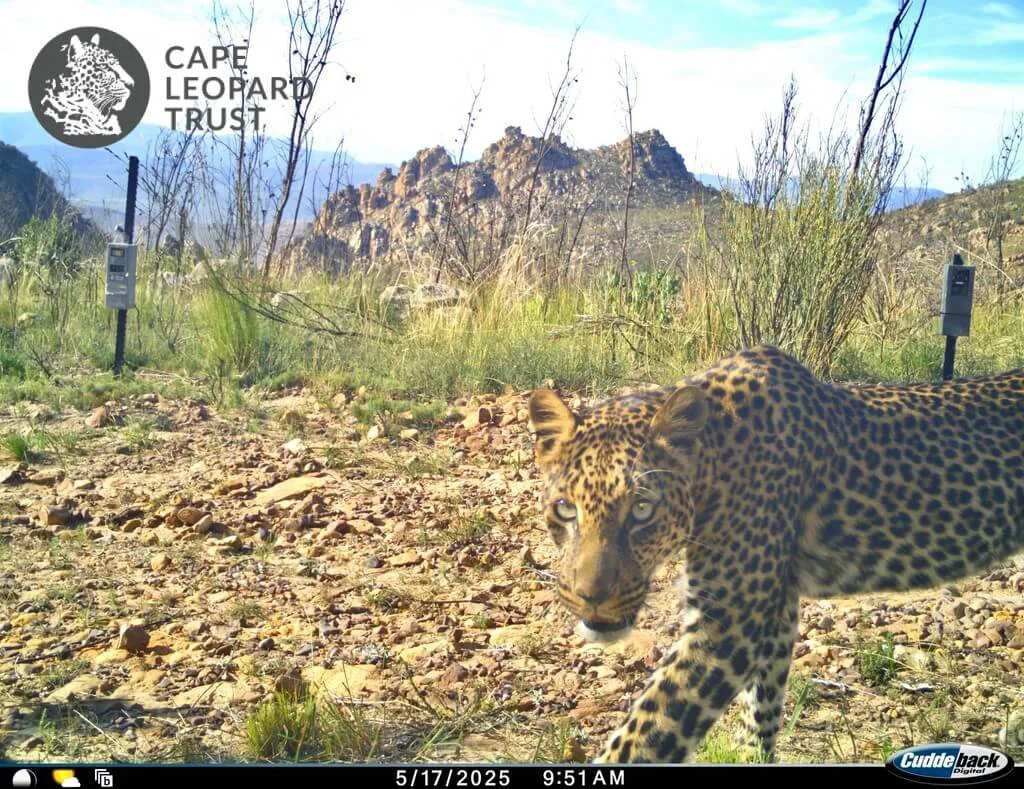
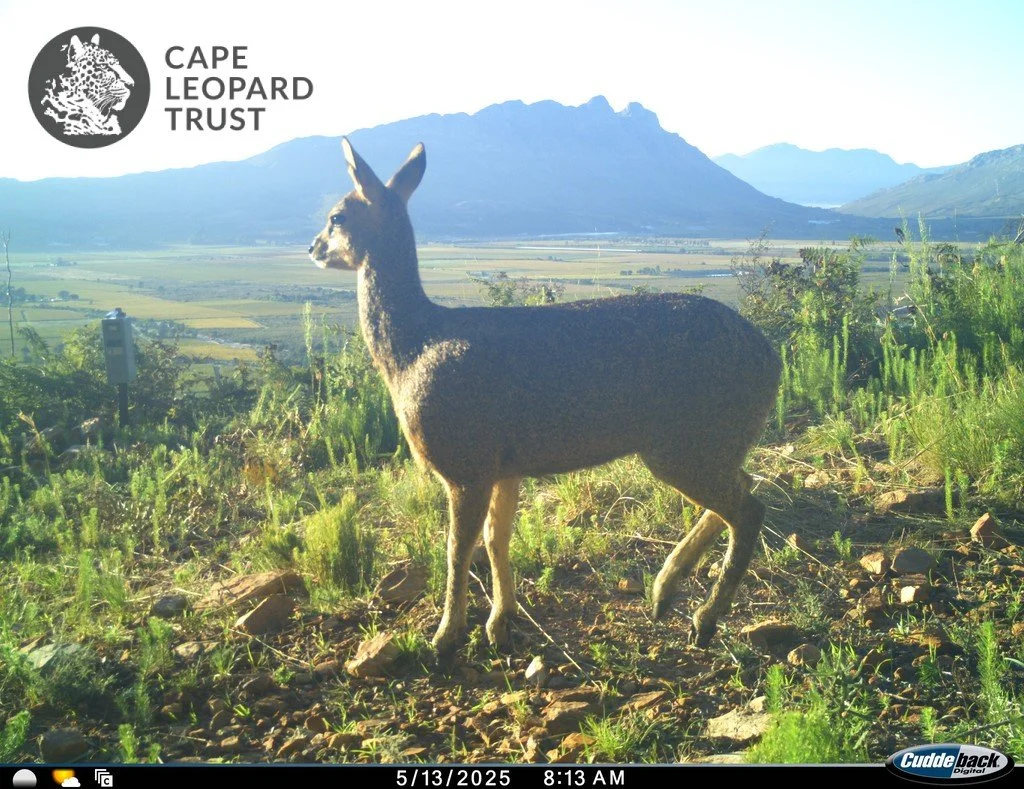
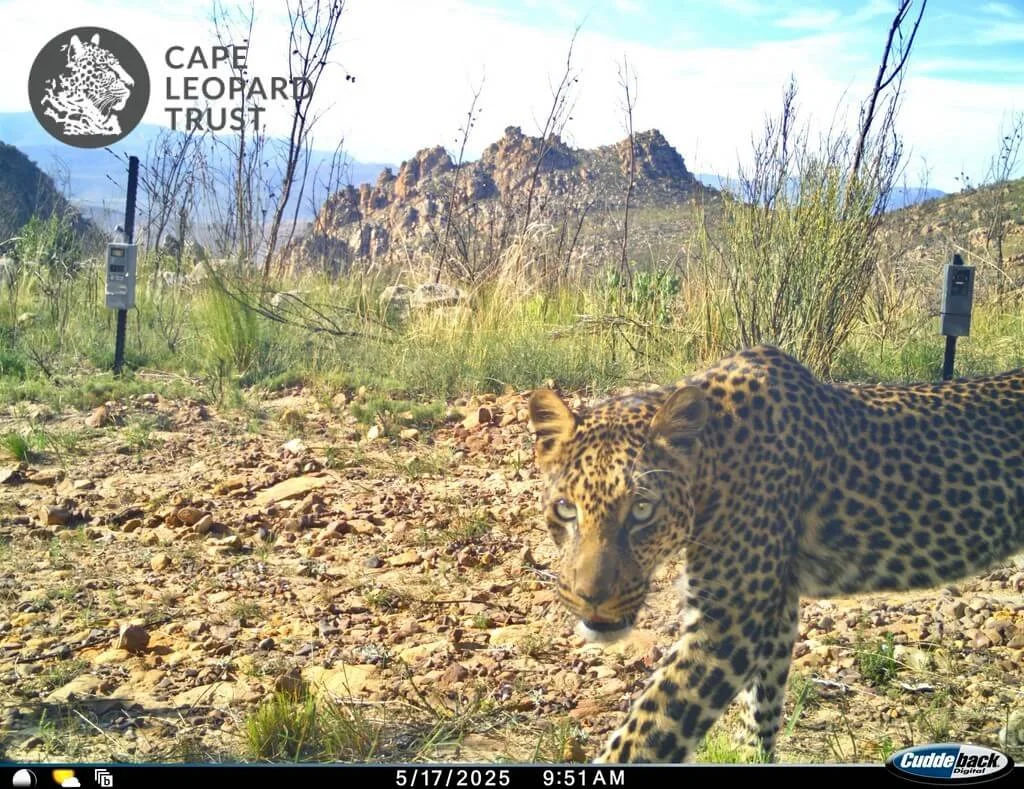
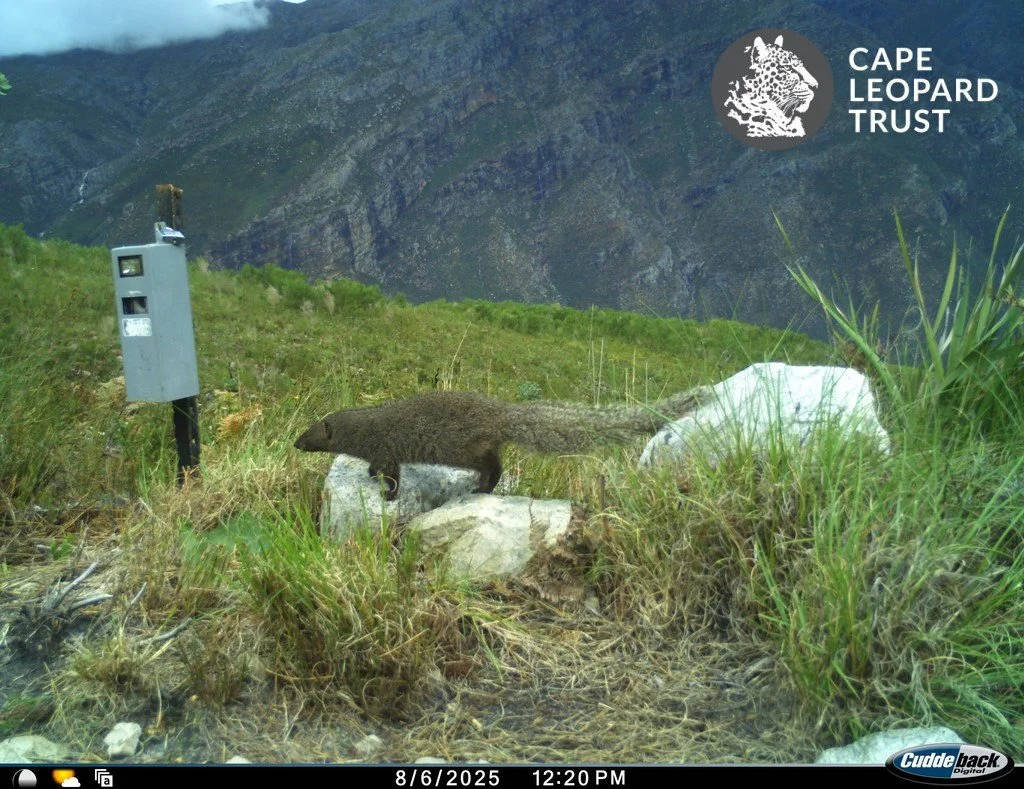
The Cape Leopard Trust (CLT), a leading conservation organisation focused on protecting the Cape’s leopards and promoting healthy ecosystems through research, education, and community engagement, have completed a re-survey across ~2500 km2 of the Boland Mountain Complex (BMC), mimicking the original CLT survey design and making use of 90 paired camera trap stations spread.

The recent survey reflects the scale and collaboration required to conduct an extensive field project. Conservation partners contributed expertise and logistics, landowners opened their properties for access, accommodation partners offered support, and dedicated rangers and volunteers assisted with on-the-ground fieldwork.

Read more in their published blog post: Back to the Boland! Spotting Leopards and Highlighting Biodiversity

The CLT BMC survey area extends from Bainskloof in the north, continuing south through the Limietberg, Jonkershoek, Hottentots-Holland mountains and Groenlandberg, all the way to the Kogelberg coast. This range places the survey within both the Cape Winelands and Kogelberg Biosphere Reserves.

Celine MacdonaldConservation
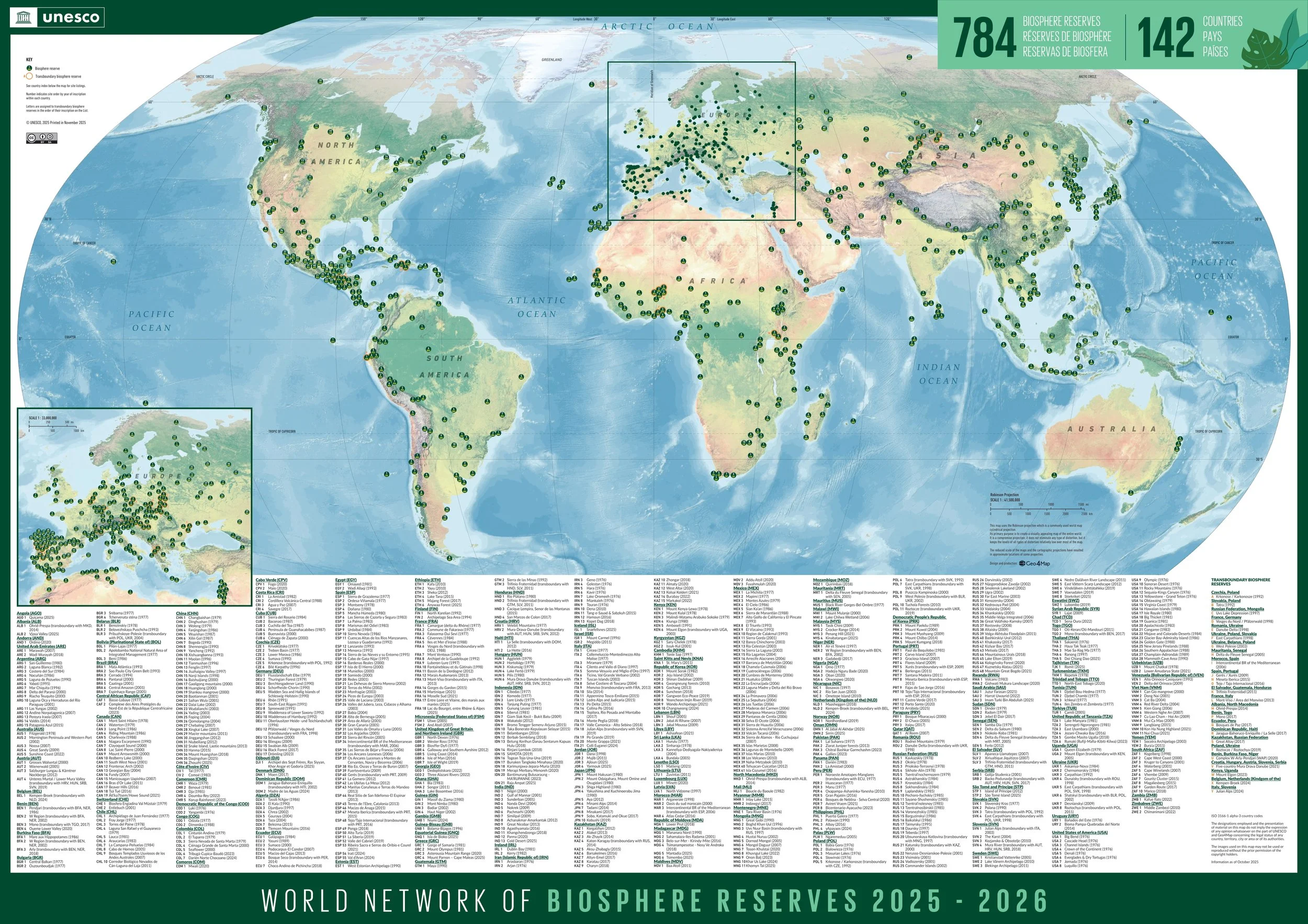
2025-2026 map launched of the world network of biosphere reserves

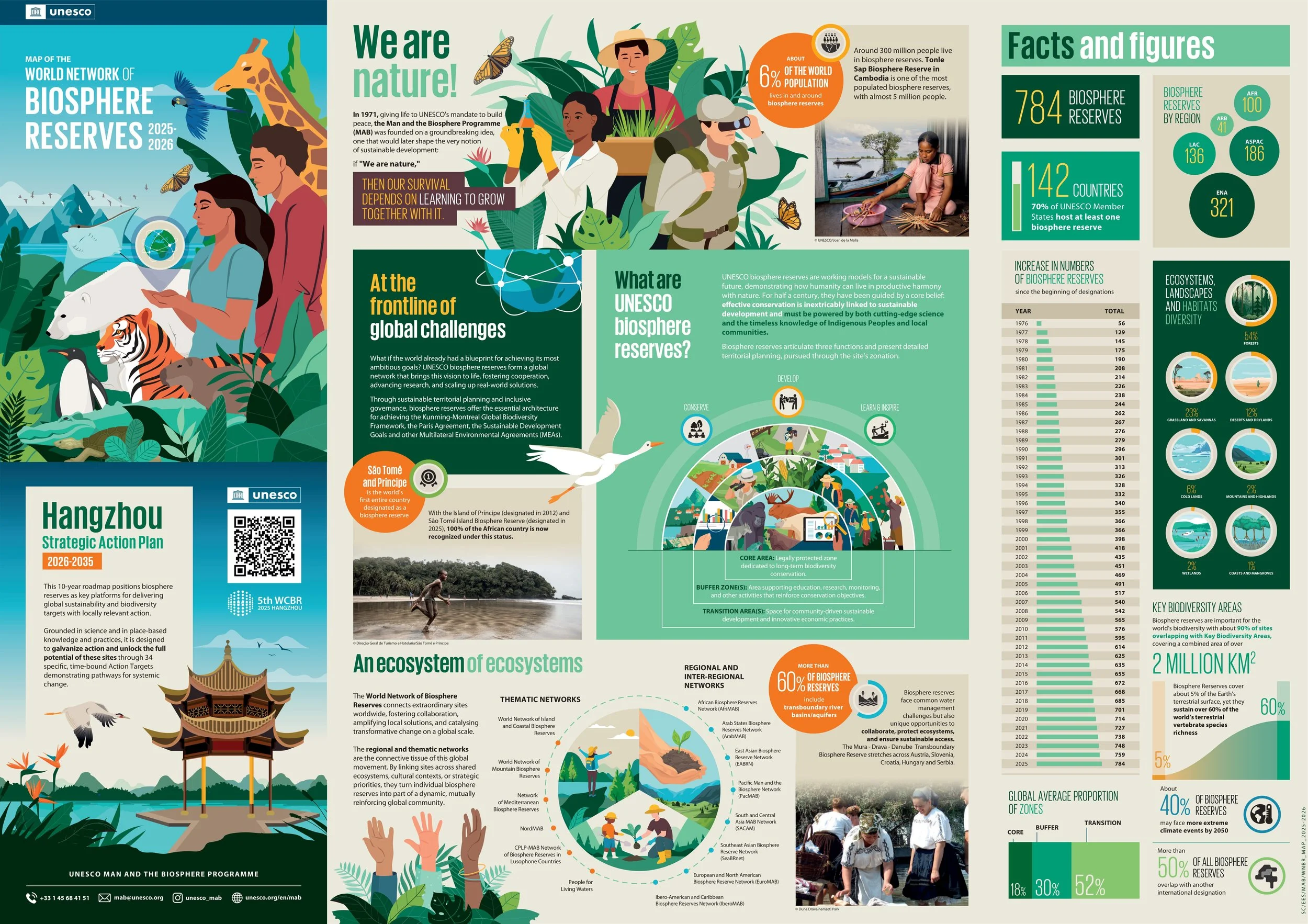
UNESCO has unveiled its 2025–2026 Map of the World Network of Biosphere Reserves, highlighting 784 biosphere reserves across 142 countries. These sites are globally recognized as living laboratories where people and nature work in harmony to tackle some of the planet’s most urgent challenges. Working together towards a sustainable future.

Understanding UNESCO’s Man and the Biosphere (MAB) Programme

At the heart of this network lies UNESCO’s Man and the Biosphere (MAB) Programme, launched in the 1970’s. Its goal is deeply rooted in a simple yet powerful vision: to improve the relationship between humans and their environments.

Through its World Network of Biosphere Reserves (WNBR), MAB supports sites that fulfill three complementary functions:

  1. Conservation – preserving biological and cultural diversity

  2. Sustainable Development – supporting economic growth that respects people and the environment

  3. Logistic Support – providing space for research, education, monitoring, and capacity building

Over the decades, biosphere reserves have grown into hubs of innovation, where local communities, scientists, governments, and the private sector collaborate to scale up nature-based solutions.

Cape Winelands Biosphere Reserve was nominated in 2007 as part of the UNESCO Man and Biosphere Reserve programme, and is one of five biosphere reserves in the Western Cape, South Africa.

Explore or download the 2025 - 2026 map: UNESCDOC Digital Library

Learn more about the UNESCO Man and Biosphere reserve Programme

Exploring further, read an article that we published in 2021 SHORT HISTORY OF THE UNESCO MAN AND THE BIOSPHERE PROGRAMME AND ITS IMPLEMENTATION IN SOUTH AFRICA

Youth on a hike in the core of Cape Winelands Biosphere Reserve, forming part of the Boland Mountain range

About Conservancies

Conservancies represent a vital model of collaborative conservation, where private landowners voluntarily unite to manage their properties in ways that sustain and protect biodiversity, ecosystems, and natural heritage. Many Conservancies function as a non-profit conservation community, fostering collective action and shared responsibility for the environment. These partnerships form an important part of South Africa’s conservation network, complementing the efforts of formally protected areas.

Within the Western Cape, more than 80 registered conservancies operate under the Conservation at Work network, each contributing to habitat preservation, sustainable land use, and community awareness. The Cape Winelands Biosphere Reserve (CWBR), is home to several of these conservancies. Among them are two within the Stellenbosch area — the Bottelary Hills Renosterveld Conservancy and the Greater Simonsberg Conservancy.

Established in 1992, the Bottelary Hills Renosterveld Conservancy safeguards 1,500 hectares of critically endangered Renosterveld within the heart of the world’s smallest and most diverse floral kingdom. Home to over 8,600 plant species—many found nowhere else on Earth—the Conservancy offers a sanctuary of natural beauty and biodiversity. Visitors can explore 130 km of mountain bike trails, scenic hiking routes, and immersive wine experiences across 55 member farms, making it an essential destination for nature and adventure enthusiasts visiting the Stellenbosch area.

The Greater Simonsberg Conservancy (GSC), established in 2004 near Stellenbosch in the Cape Winelands, covers nearly 5,000 hectares of farmland, with about 1,562 hectares dedicated to conservation. It protects critically endangered vegetation, including Swartland Shale Renosterveld and Boland Granite Fynbos, and features a 300-year-old yellowwood forest on Klapmutskop. The GSC manages alien vegetation, fire planning, and environmental education, and offers hiking and mountain-biking trails.

To find out more:


Shared learning amongst biosphere reserves

While representing a wide range of contexts, biosphere reserves (BR’s) worldwide, share a common framework. As set out by the UNESCO Man and Biosphere Programme, to achieve its mission in enriching the relationship between people and their environments and contribute to the global Sustainable Development Goals. Those with shared characteristics, such as coastlines or mountains, have an opportunity for shared learning through formed BR networks.

Cape Winelands Biosphere Reserve (CWBR) is honoured to have become a member of the World Network of Mountain Biosphere Reserves. In addition to being given the opportunity to send a representative to the 2nd WNMBR meeting that took place in September 2024, hosted in Ordino Biosphere Reserve, in Andorra.

The five-day conference hosted interactive talks and working group sessions, followed by opportunities to visit areas of Ordino Biosphere Reserve. Participants represented biosphere reserves in Asia, Europe, Lebanon, South and North America.

Our CWBR facilitator shared insight on a discussion panel exploring methods of branding within biosphere reserves, and the use of the biosphere reserve logo’s name. The support of businesses, creating awareness of biosphere reserves. The intricacies, challenges, and advantages that come with it.

A hight for the CWBR team member was the Sorteny National Park. To experience the rich culture, history, and unique biodiversity. An example that stood out was the raising of cattle in the area, a practice spanning centuries, which has been integrated into the biosphere reserves conservation management systems. In addition to an excentric biodiversity walk, led by a couple enacting characters from 1906 who were smuggling tobacco, perfume, and sugar across the Pyrenees mountains in wintertime when work was sparse. The participants were led on a smugglers route, learning as they went along, about the history and the plants in the area.

Cattle ranging in Sorteny National Park

Cape Winelands Biosphere Reserve is also part of the World Network of Island and Coastal Biosphere Reserves.

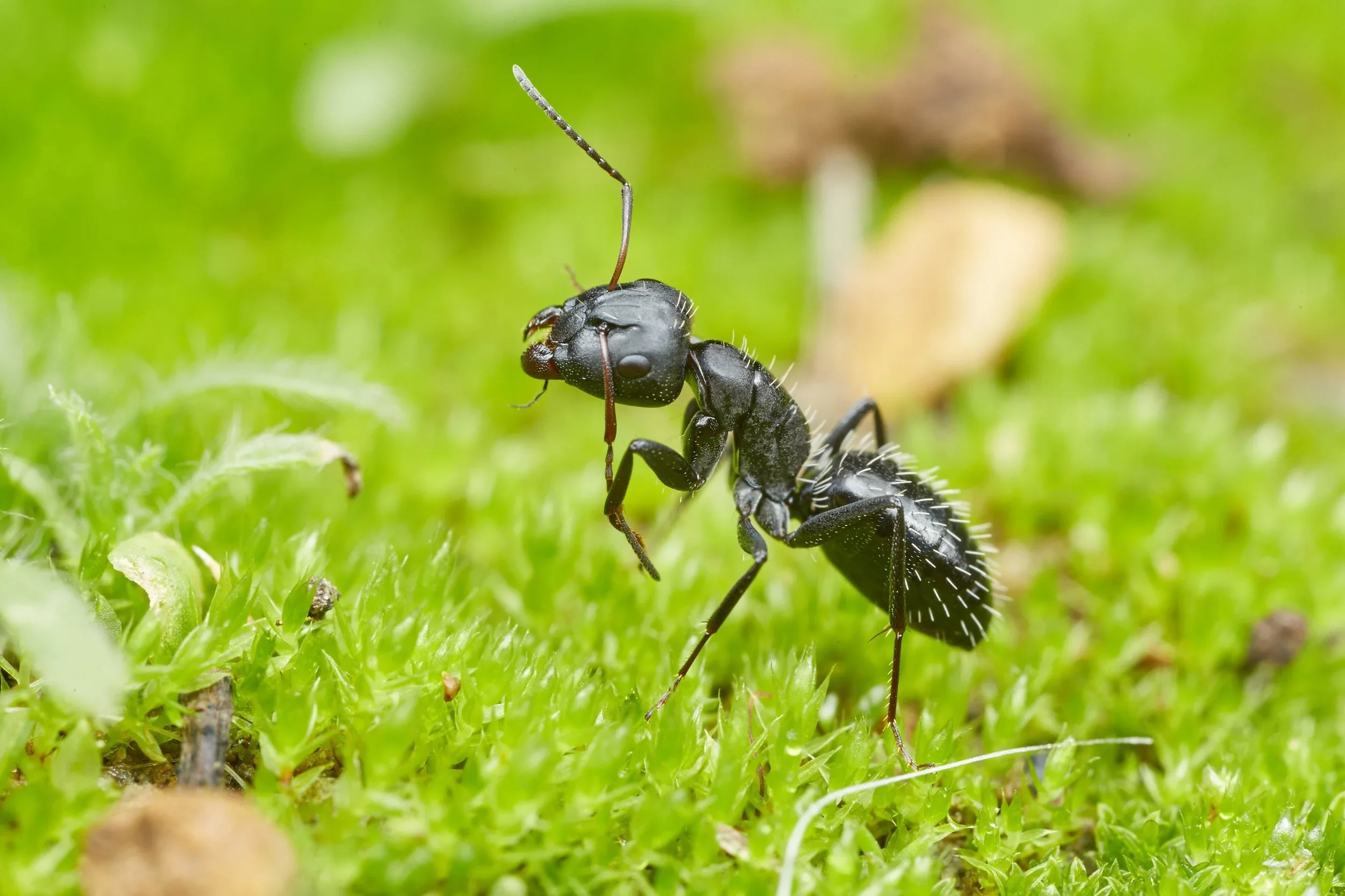
The core of the CWBR, the Boland Mountain range, hosts the most increadible biodiversity in the world. The Fynbos biome, forming part of the Cape Floristic Region. In addition, the Berg Catchment is the source of seven rivers, that courses through towns, cities, and three other Western Cape biosphere reserves, eventually flowing out into the Indian and Atlantic Ocean. 

To learn more about Ordino Biosphere Reserve visit: https://biosferaordino.ad/recursos

To find out more about the networks and its members, click the logo’s below.