Biodiversity conservation through awareness
FGASA Meeting.PNG

With the new year in full swing, it is time for the first Western Cape Field Guides Association of South Africa (WC FGASA) meeting, facilitated by Cape Winelands Biosphere Reserve. This is an event wherein people from all disciplines of conservation and tourism have the opportunity to get together to listen to talks, network, and have discussions.

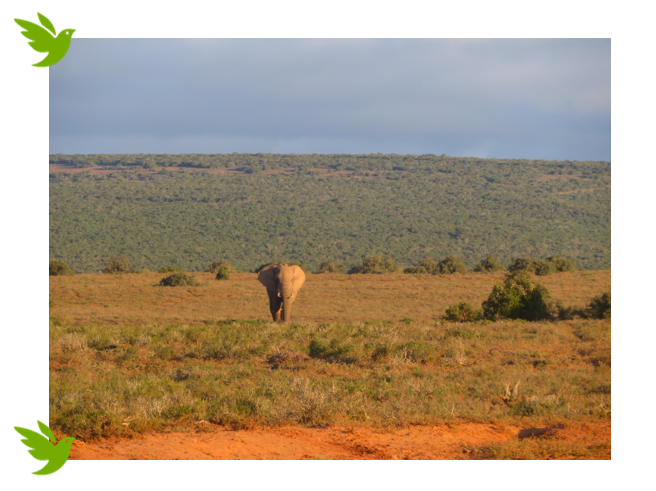
At this meeting, Dr Tony Rebelo will speak about the app iNaturalist and Dr Don Pinnock will speak about his latest book The Last Elephants.

The event will be in February and take place in Cape Town.

If you are interested in attending the event, please email: cwbioreserve@gmail.com for details and rsvp

ABOUT THE SPEAKERS

Dr Tony Rebelo is a scientist at the South African National Biodiversity Institute (SANBI). He obtained his PhD in Zoology at UCT in 1992 on the topic of the Preservation of the Cape Flora. He has co-authored books on Pollination Ecology, Proteas and Vegetation types of South Africa, as well as numerous scientific publications on these topics. His special interests are conservation planning, protea ecology and encouraging amateurs to get involved in scientific research. To this end he has championed the design of user-friendly field guides, the use of common names for plants, the Protea Atlas Project and iNaturalist. He recently won the Regional Award for work towards the restoration of the unique Cape Flats Sand Fynbos habitat at Tokai Park and its critically endangered plant species at the 8th World Conference on Ecological Restoration which was held in Cape Town in September 2019.

About the app: One of the world’s most popular nature apps and website, iNaturalist helps you identify the plants and animals around you. Get connected with a community of over 750,000 scientists and naturalists who can help you learn more about nature! What’s more, by recording and sharing your observations, you’ll create research quality data for scientists working to better understand and protect nature. iNaturalist is a joint initiative by the California Academy of Sciences and the National Geographic Society and in southern Africa by the South African National Biodiversity Institute.

Dr Don Pinnock is an investigative journalist and photographer who, some time back, realised he knew little about the natural world. So he set out to discover it. This took him to five continents – including Antarctica – and resulted in five books on natural history and hundreds of articles. The Last Elephants, published last year with Colin Bell, is his 18th book and has a Foreword by Prince William, Duke of Cambridge. He and his wife, the novelist Patricia Schonstein, live in Cape Town.

About the book: The Last Elephants, compiled with Colin Bell on the state of elephants in Africa, has been called the 'elephant bible'. This book tells the stories of the continent's elephants and the dangers they face through the eyes of over 40 experts, researchers, writers, conservationists, poets and park rangers throughout Africa. They cover most of the prime elephant ranges from Timbuktu to South Africa; from Nigeria to Tanzania and are supported by images from some of the continent’s finest photographers.

In partnership with

 
FGASA_logo.PNG

PROGRAMME

8h30     Tea & Coffee

9h00     Welcome and introduction

9h15    Dr Tony Rebelo

10h15 Tea & Coffee break

10h45  Dr Don Pinnock  

11h45 Latest FGASA News

12h00 Lunch and networking

13h30 End of meeting

The long-distance safari of the Wandering Glider
Pantala flavescens.Bali.H.Wildermuth.P1110109 Kopie.jpg

Imagine you are sitting in a city park for a lunch break, relaxing after a hard morning’s work, enjoying to do nothing, just looking at the sky. Awakening from your day dreams you suddenly become aware of a dozen or so dragonflies leisurely sailing back and forth some metres over your head, sometimes plucking a tiny insect from the air, a snack for the moment. Would you ever assume that these swarm-feeding animals are the strongest and most skillful insects on our planet? Pantala flavescens is their scientific name. Known as the ‘Wandering Glider’ in South Africa, this is the globally widest-ranging dragonfly species that occurs mainly in the tropical and subtropical zones of all continents, but only rarely appearing as vagrant in Europe though. In Africa, it may be found from the southernmost point up to the Sub-Saharan zone. As its vernacular name reveals, this dragonfly regularly migrates over long distances. Individuals in Millions have been discovered by Chinese radar stations even crossing the Himalayan up to 5’300 m a.s.l. The most spectacular migration was evidenced by the marine biologist Charles Anderson who lives in the Maldives. He observed Globe Skimmers every year arriving at the islands with the monsoon, coming from southern India in October in great numbers, then continuing on to the Seychelles and aiming to eastern Africa where they arrive with the monsoon rains that enable them to reproduce after having crossed 3500 km of the open sea. Exploiting of the surface waters emerged from the rains they may produce three to four generations due to their enormously quick larval development just needing 35–40 days. The swarms then fly back over the Ocean to the northern Indian subcontinent to start the annual circuit again. Amazing how they make their migratory way of estimated 14 000 to 18 000 km over land and across sea. Although they harness the tail winds of the steadily moving Inter-tropical Convergence Zone they still have to be on the wing while crossing the Indian Ocean. How do they orient during the day and at night? Where do they get the energy from? Do they perhaps feed on tiny insects drifted themselves by the winds? Many questions are still open.

Anyway, next time you come across a dragonfly you may remember the stunning achievement just of a small insect like the Wandering Glider. By the way: South Africa harbors more than 160 species of these fascinating creatures, all with their own habitat preferences and behaviour, some even endemic. But don’t forget that every dragonfly needs freshwater for completing its life cycle: streams and rivers, swamps and ponds, lakes and reservoirs.

Female Pantala Flavescens

Female Pantala Flavescens

Male Pantala Flavescens

Male Pantala Flavescens

Bee or not to bee

“Oh, the buzzin' of the bees in the cigarette trees
The soda water fountain
Where the lemonade springs and the bluebird sings
In that Big Rock Candy Mountain

Many people will recognise the open lines from the song Big Rock Candy Mountain however the buzzin of the bees is a sound we are almost certainly hearing less often. (And just out of interest, no bees are hearing the buzzing because they are deaf – their communication is all visual and chemical.)

Jenny Cullinan, of UJU Bees is passionate about bees but not any bees, but rather wild bees more than bees in boxes, which she compares to most of the world’s chicken.  She regards these as “battery bees” – living in most unnatural circumstances in man-made hives. Wild bees, she says, live in nests, not hives. And where do the wild bees live – often in holes in dead trees or in protected rocky crevices. And in case we are getting the idea that all wild bees live communally, bees broadly live either social, semi- solitary or solitary lives.

First let’s focus on social bees – where we get our honey.

In a bee nest, Jenny shared at a recent symposium, wild bees only produce enough honey for their needs. By introducing them to man-made hives, where the queen is cut off from the entire hive, the bees go into super production, literally storing the honey in cells in the ‘Super” – the top half of the hive.

Jenny says that in the wild nests, disease and predators, such as the viroa mite and wax moth are not a problem. Her amazing studies show that, in fact, nests harbour tiny pseudo scorpions which eat the larvae of the wax moth. These pseudo scorpion are so small that they seem to be treated as pets by the colony, yes pets, not pests. The bees actually will bring wax moth larvae to these scorpions as food. (One can only see this happening under great magnification.)

Jenny shared so many interesting facts and video, in her recent presentation. She explained that the social bees have no immune system so that it is vital that they keep the nest extremely clean and disease free. One technique is that certain bees do not have the job of collecting pollen but propolis which then covers the walls and entrance. Propolis has disinfection properties so each bee as it leaves and enters the nest gets a coating of this essential oil. (These guys are smart, you have to agree. They have certainly developed some great techniques in their 18 million years of evolution.) Nature’s genius. Incidentally, this propolis has fire retardant properties, - it melts rather than burns. All Nature’s genius.

If they are so clever, what are the downsides for these bees, wild or in hives. There are Banded Bee Pirate Wasps, related to bees that predate bees. The wasps are most active at the hottest part of the day. At times of high wasp activity, all bees must remain by the hive, or rather say nest, to protect the swarm. Only as the day cools can the bees leave the nest to forage. And even then, they are not safe. They are favourite prey of birds such as Drongos, and flycatchers and even Sugarbirds who enjoy them as the bee’s rummage in flowers such as a Protea repens. Lizards also enjoy them plus they also have to avoid Yellow Jacket Wasps and robber flies.

And that’s not all. Bee numbers are being decimated by the use of pesticides, so their numbers are dwindling throughout the world, particularly our wild bees. Jenny noted that wild bees in Europe are in serious trouble. In Germany wild bees swarms are illegal and by law must be destroyed as they are believed to harbour disease and bee pest.

Bees are the pollinators of so many fynbos species. If they die out, so do so many fynbos species plus we need bees to pollinate so many of our food crops, particularly our fruit. Imagine, for example, no tomatoes, apples or pears on our supermarket shelves. There are areas of China where they have used so much pesticide, they now have to pollinate their fruit trees by hand with a paintbrush where they could have all this done by bees and get honey as a spinoff.

To bee or not to bee – Part 2

If you are like me, if you said bees, you would immediately think of hives with swarms of bees producing wonderful sweet honey but also that a bee can give you a nasty sting.

BUT not all bees are honeybees. This I learnt attending a lecture given by Jenny Cullinan, who studies all wild bees, social, semi-social and solitary.

Solitary bees by design are the main fynbos pollinators however the introduction of a great many honeybees hives is proving a problem to them and their numbers are declining.  The high density of honeybees means that despite them not being as efficient pollinators as solitary bees, their high numbers mean they outcompete the solitary and semi-social bees.  Another factor leading to their decline is that bees need a temperature of 25 degrees to fly. Social/honeybees reach this temperature earlier in the day as the nest warms earlier because of combined body temperature. Semi-solitary and solitary bees need the day to warm up before they can fly. This too means many flowers have already been pollinated by honey bees before they can be reached by their more solitary cousins.

Back 130 million years ago all plants were wind pollinated – no bees - however there were insect- eating wasps. The evolution to bees came about as flowers were producing pollen which the wasps realised was also protein. This discovery led to the evolution of bees, a specialised species of wasp totally dependent on flowers. This also led to flowers becoming more attractive as they discovered that there was an alternative to wind pollination. The more noticeable the flower, the more likely it would attract bees. Interestingly, bees however do not see red so the role of pollination of red flowers is filled by butterflies.

The bees also evolved a fascinating way to harvest pollen bearing in mind that they do not have baskets or hands. As they fly, they generate static electricity, so the pollen attaches itself to the bee.

Some bees are species specific so if a plant species goes extinct, so does that species of bee.

Carpenter bees, a species of solitary bee, is a buzz pollinator. Here the bee lands on a flower – an example is the flower of a Keurboom – grasps the flower and buzzes on the note of C. On ‘hearing’ this, the flower releases its pollen. A buzz pollinated flower will not release pollen to a honeybee.

Solitary and semi-solitary bees look after their young. Carpenter bees for example, excavate tunnels in wood in which they lay their eggs and raise their young. One bee species female nests in the ground whereas the male will sleep overnight in loose sand such as a mole rat run. In the case of semi-social bees, the adults raise their babies with the help of her earlier brood. They don’t make actual honey but, as pollen goes off quickly, they preserve the pollen with sugar.

This is just a taste of what there is to learn about bees and the ecological role they play in pollination. If you ever get the chance to attend a Jenny Cullinan talk, grab it. Her passion for bees and their conservation is infectious. She is writing a book on her research but until then, there is lots on the internet so go read more about these fascinating creatures. 

A solitary bee. The head of an allodapine bee protruding from the entrance to its nest in the tip of a dead pincushion bush.

A solitary bee. The head of an allodapine bee protruding from the entrance to its nest in the tip of a dead pincushion bush.

“The chelifer found in South Africa is mostly Ellingsenius fulleri and is believed to be a predator of small mites, wax moth larvae and other arthropods found in the nest debris. They often cling onto the legs of bees and are believed to be spread i…

“The chelifer found in South Africa is mostly Ellingsenius fulleri and is believed to be a predator of small mites, wax moth larvae and other arthropods found in the nest debris. They often cling onto the legs of bees and are believed to be spread in this way to other colonies” (Geoff Tribe). ujubee.com

2019 ArchiveStephen Smuts
Research within CWBR

New results released from research within the CWBR. The Fynbos Biome exists along the Southern Coast of South Africa and is the smallest, but diverse Floral Kingdom in the world with over 10,000 species.

“Now botanists from SU's Department of Botany and Zoology have found evidence that the largest Cape geophyte genus, Oxalis, has developed a unique association with the bacterial genus Bacillus, that help it to fix nitrogen from the air and to perform extraordinary feats of germination.

Furthermore, they proved that the Bacillus bacteria are so integrated into this symbiotic relationship that they are even inherited from mother plant to seed. The results of the study was published in the journal BMC Plant Biology recently, with the title "Nitrogen-fixing bacteria and Oxalis - evidence for a vertically inherited bacterial symbiosis".

To read the full article click link below -

New evidence that bacteria drive biodiversity in the Cape Floral Region by Stellenbosch University

South Africa’s National Biodiversity Assessment

An article released by SANBI, one of CWBR’s partners

The National Biodiversity Assessment (NBA) was released on 3 October 2019 by the Minister of Environment, Forestry and Fisheries, Ms Barbara Creecy. The NBA is the primary tool for reporting on the state of biodiversity in South Africa. It is used to inform policies, strategies and activities for managing and conserving biodiversity more effectively.

The NBA showcases findings for the headline indicators of threat status and protection level for both ecosystems and species, and presents these findings across the terrestrial, inland aquatic, estuarine and marine realms, as well as for the coast and South Africa’s sub-Antarctic territory. New analyses in NBA 2018 include trend analyses for species threat status, an assessment of land cover change in the terrestrial environment, and an examination of potential ways to assess genetic diversity on a national scale.

The NBA is led by the South African National Biodiversity Institute (SANBI) as part of their mandate to monitor the status of South Africa’s biodiversity. The NBA was undertaken between 2015 and 2019. It involved extensive collaboration from over 470 individuals representing about 90 organisations. The full suite of NBA products, which include a synthesis report, seven technical reports, datasets, maps, supplementary materials and popular products, is accessible via http://nba.sanbi.org.za/

Mapping Invasive Alien Trees in strategic water source areas in the Berg and Breede Catchments

The Socio-Economic Benefits of investing in Ecological Infrastructure (SEBEI) project teamed up with the Cape Winelands Biosphere Reserve (CWBR) to map invasive alien trees in the upper Berg-Breede catchments in 2019. The CWBR provided the drone footage which was instrumental in the ground-truthing of the classification results. A map of invasive alien trees in this region is a critical need, to understand where these alien trees are and to estimate the costs of clearing, to assist in management and ultimately the control of these problematic species.

Various approaches have been applied to map alien invasive trees in the Cape Floristic Region, with most being informed by expert estimates or based on in-field experience. The accuracy of these datasets is difficult to assess, but have, in general, been shown to overestimate density estimates. In this research, Dr’s Holden and Rebelo combined Google Earth Engine’s processing power, expert knowledge and drone technology to classify Sentinel 2a imagery to provide an accurate and up-to-date understanding of the occurrence and density of alien invasive trees in the upper regions of the Berg and Breede catchments at a 10m spatial resolution.

They combined bands with the highest discriminatory power from the available 13 spectral bands along with a number of spectral indices for the classification, which resulted in a 93% accuracy with both the training and validation datasets. Although the resulting maps reflect early 2019 invasions for the study area, the methodology and data captured can be used to rerun the routines to continuously update our understanding of alien invasive tree coverages in the catchments.

The importance of using expert knowledge combined with drone technology is highlighted for training classifiers to distinguish effectively between alien invasive trees and indigenous vegetation. This work forms part of the larger SEBEI project which aims to encourage investment into ecological infrastructure by developing an evidence-base of the impacts of ecological infrastructure interventions.

An up-to-date layer of invasive alien trees is a critical step towards modelling the hydrological benefits of investing in the clearing of alien invasive trees in strategic water source areas, an additional focus of the SEBEI project. Dr’s Rebelo and Holden launched a first draft of this alien tree map in September 2019. If you would like to request a copy, you can e-mail them on petra.holden@uct.ac.za or arebelo@sun.ac.za.

Acknowledgements: This project is fully funded by the Danish International Development Agency.

Dr Petra Holden; Dr Alanna Rebelo

African Climate and Development Initiative, University of Cape Town

Conservation Ecology & Entomology, Stellenbosch University

PHOTO: The Mapping Workshop held in the Berg-Breede catchment to get stakeholder input into the alien tree maps produced. (PHOTO credit: SEBEI)

PHOTO: The Mapping Workshop held in the Berg-Breede catchment to get stakeholder input into the alien tree maps produced. (PHOTO credit: SEBEI)

PHOTO: Ecological Infrastructure (the Riviersonderend palmiet wetland) invaded by alien vegetation (Black Wattle) (PHOTO credit: Alanna Rebelo)

PHOTO: Ecological Infrastructure (the Riviersonderend palmiet wetland) invaded by alien vegetation (Black Wattle) (PHOTO credit: Alanna Rebelo)

PHOTO: Ecological Infrastructure (the Holsloot River) invaded by alien vegetation (here Black Wattle trees) (PHOTO credit: Alanna Rebelo)

PHOTO: Ecological Infrastructure (the Holsloot River) invaded by alien vegetation (here Black Wattle trees) (PHOTO credit: Alanna Rebelo)