
Strengthening Global Collaboration for Sustainable Futures: The 13th WNICBR Annual Meeting in Vietnam
International biosphere reserve representatives gather in Vietnam to explore the balance between urban development, biodiversity conservation and sustainable livelihoods.
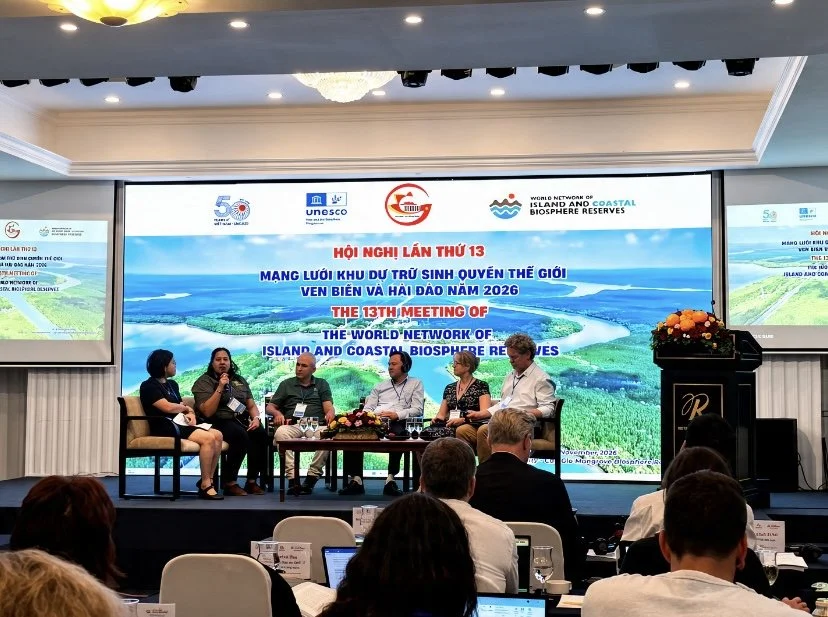
From 5 – 8 November 2026, Ho Chi Minh City, Vietnam, hosted the 13th Annual Meeting of the World Network of Island and Coastal Biosphere Reserves (WNICBR). The meeting brought together representatives from biosphere reserves, international organisations, government institutions, research institutions and environmental organisations to exchange knowledge and strengthen international cooperation.
Held under the theme “Balancing Urban Development and Environmental Sustainability in Island and Coastal Biosphere Reserves,” the meeting provided a platform to discuss the challenges facing coastal and island environments and explore approaches to sustainable development.
Approximately 85 delegates attended, including 34 international representatives from 16 countries. South Africa was among the participating countries, contributing to discussions on biosphere reserve management, conservation and sustainable development.
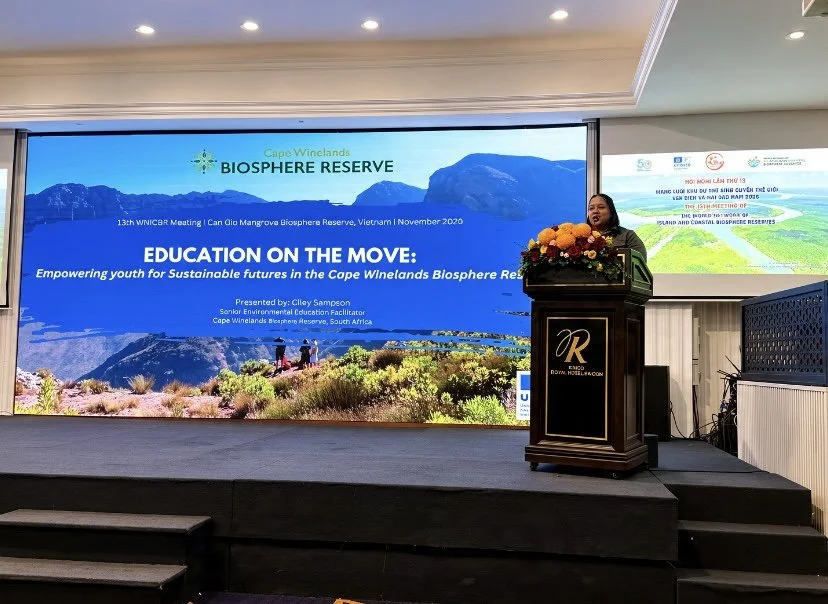
The Cape Winelands Biosphere Reserve (CWBR) successfully applied for the opportunity to send a representative to present its Education on the Move (EOM) programme at the conference. The presentation, titled “Education on the Move: Empowering Youth for Sustainable Futures in the Cape Winelands Biosphere Reserve”. The presentation showcased CWBR's approach to environmental education through mobile learning, practical science activities and community engagement, highlighting the role of education in empowering young people to become active environmental stewards. The presentation also showcased CWBR's work internationally and encouraged knowledge exchange on the role of environmental education in sustainability.
Balancing Development and Conservation
Coastal and island regions face increasing pressure from urbanisation, population growth, climate change, biodiversity loss and competing demands for natural resources.
The conference explored how biosphere reserves can support development while maintaining ecological integrity and improving the well-being of local communities.
A key message throughout the discussions was that conservation and development should not be viewed as competing priorities. Instead, sustainable development requires integrated approaches that combine biodiversity protection, responsible resource management, community participation and economic opportunities.
Four key thematic areas guided the discussions:
1. Green economic development and sustainable livelihoods
Delegates explored how green economic opportunities, sustainable tourism and community-based initiatives can support local livelihoods while reducing pressure on natural ecosystems.
2. Circular economy and efficient resource management
Discussions highlighted the importance of reducing waste, improving resource efficiency and moving towards more responsible consumption and production practices.
3. Governance and biosphere reserve management
Effective governance was recognised as essential to successful biosphere reserve management. Topics included institutional coordination, integrated management, monitoring and evaluation, policy development and meaningful community participation in decision-making.
4. Biodiversity conservation, green economies and carbon markets
Delegates explored opportunities to connect conservation with sustainable economic development through mechanisms such as carbon credits, biodiversity credits, blue carbon and nature-based solutions.
Together, these discussions highlighted the importance of combining scientific knowledge, effective governance and community involvement to address complex environmental challenges.
From Knowledge Exchange to Practical Collaboration
Beyond the thematic sessions, the meeting created opportunities for biosphere reserve representatives to share experiences, showcase initiatives and explore potential partnerships.
Discussions covered ecosystem restoration, sustainable tourism, green infrastructure, environmental education, community initiatives and youth empowerment.
A recurring message was that biosphere reserves are not simply protected natural spaces. They are places where people and nature coexist, requiring conservation approaches that consider the social and economic realities of surrounding communities.
Environmental education and local capacity development were also important considerations. Building environmental awareness and creating opportunities for meaningful participation are essential to ensuring that communities become active partners in achieving long-term sustainability.
International knowledge exchange allows successful approaches and lessons learnt in one region to inform initiatives elsewhere, while recognising that solutions must always be adapted to local circumstances.
Cần Giờ: Bringing Conservation and Development into Perspective
A highlight of the programme was the field excursion to Cần Giờ Mangrove Biosphere Reserve, offering delegates an opportunity to experience its mangrove ecosystems and learn about their management.
Recognised by UNESCO in 2000, Cần Giờ was Vietnam's first World Biosphere Reserve. Its mangroves play an important role in supporting biodiversity, protecting coastlines, regulating the climate and sustaining local livelihoods.
The excursion demonstrated the interconnectedness of ecosystem conservation, restoration, sustainable tourism and community development. It provided a practical example of how biosphere reserves can balance environmental protection with the needs and aspirations of surrounding communities.
Strengthening the Future of the Network
An important outcome of the meeting was the adoption of a final declaration outlining priorities for continued cooperation among WNICBR members.
One of the key commitments was to contribute to the Hangzhou Strategic Action Plan, particularly Action Target 18, through the development of guidelines by 2028 addressing the specific challenges of coastal and marine biosphere reserves.
The network also identified opportunities to strengthen joint research, facilitate training and capacity development, exchange data and experiences, and promote cooperation between member biosphere reserves.
These commitments provide a foundation for translating international discussions into practical initiatives that can support improved management and sustainable development across coastal and island environments.
Why International Collaboration Matters
The 13th WNICBR Annual Meeting reinforced the importance of international collaboration in addressing environmental challenges that extend beyond national borders.
Although biosphere reserves operate within different geographical, political and socio-economic contexts, many face similar pressures relating to climate change, urban development, biodiversity conservation and community livelihoods.
For South Africa, participation in these international discussions provides an opportunity to share local experiences while gaining insights that can strengthen biosphere reserve management, environmental education and community engagement at home.
Ultimately, sustainable futures require more than protecting natural ecosystems. They depend on collaboration between governments, researchers, organisations, communities and young people, supported by shared knowledge, innovation and a commitment to responsible development.
As the WNICBR continues to strengthen its international network, the next challenge is to translate the knowledge, partnerships and commitments established during the meeting into meaningful action.
The future of our coastal and island environments depends on our ability to work together, protect biodiversity and create opportunities for both people and nature to thrive.
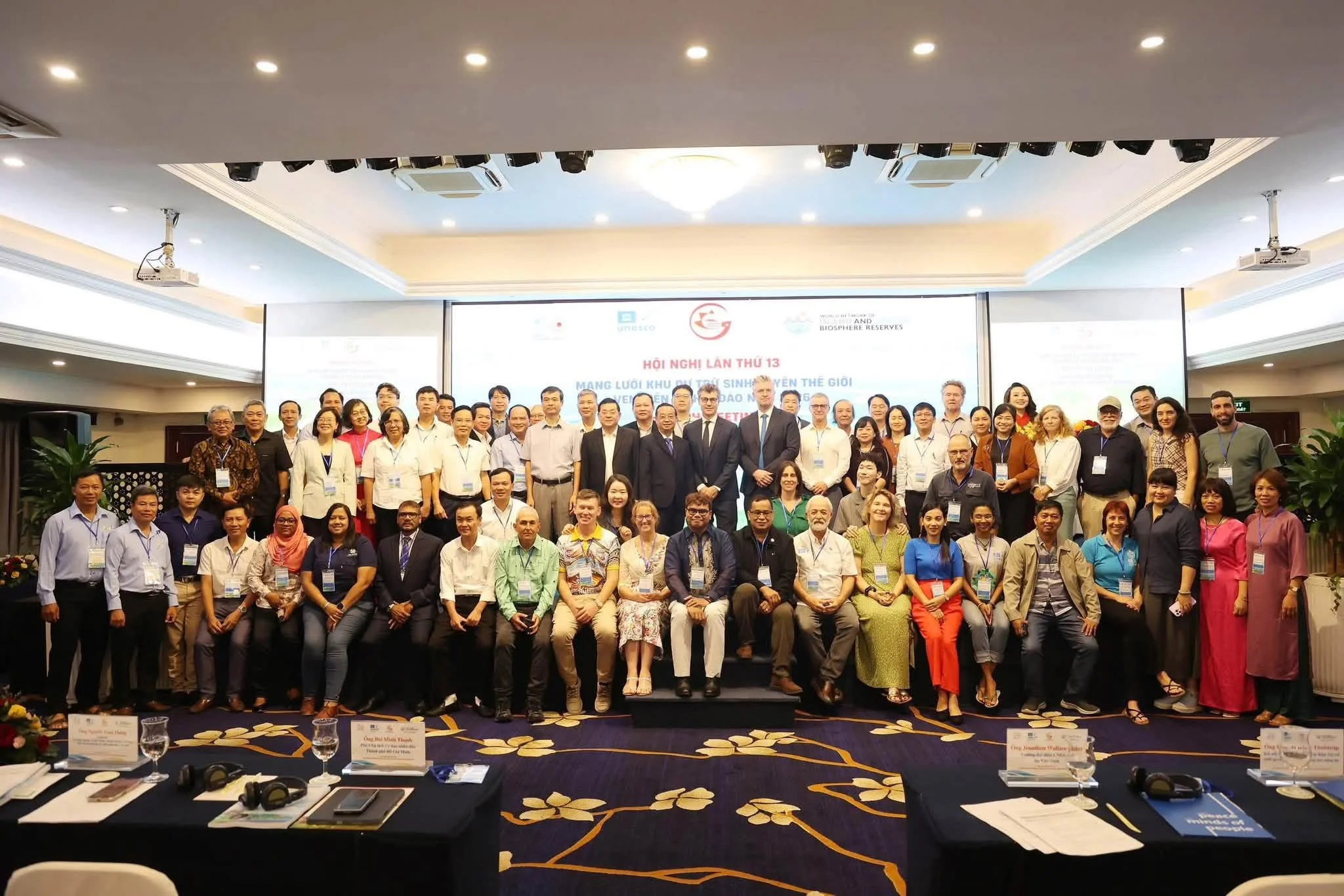
The delegates at the World Network of Island and Coastal Biosphere Reserves meeting 2026